
Sustainability can be seen as fulfilling the needs of the present generation while still keeping enough of a specific resource for future generations to come. Through the eyes of the fishing industry, this means leaving enough fish in the ocean and respecting the habitats of the fish, so that future generations will still be able to eat and use fish as they need to.
Strong sustainability can be defined as fishing that can be maintained indefinitely, without negatively effecting the existence of the species caught or the other species that form part of the ecosystem, or the fishing communities that depend on the industry.
Weak sustainability is when overfishing takes place, when too much fish is caught before they can reproduce. This then also negatively effects the other species that form part of the ecosystem.
An Externality is an economic term referring to the cost or benefit incurred or received by a third party. In the fishing industry, the harvesting of fish also has an impact on other third parties, such as the habitat of the fish. This can be seen as a negative externality of the fishing industry. These harvesting activities may affect the biological productivity of the fish stock by indirectly damaging the habitat quality. This is referred to as an Ecosystem externality.
The tragedy of the commons is a problem that occurs when individuals exploit a shared resource to the extent that demand overwhelms supply and the resource becomes unavailable. This can be seen in the fishing industry, because they depend on the ocean, which is a common resource. If one company over fish, the shared resource would be exploited, resulting in the fish being very scares and that other companies would not be able to fish at their highest production level. It is thus very important to maintain sustainability, and to not over fish, to avoid this problem.
Resource depletion is the exhaustion of materials within a certain location. Resources are divided between non-renewable resources and renewable resources. Usage of either forms of resources beyond their rate of replacement is resource depletion.
Fishery resources are renewable natural resource but can become extinct if continuous and indiscriminate harvest is implied. Fishing is an open access regime where there are many negative externalities, which implies that uncontrolled fishery will most likely end up in tragedy of commons.
Resource depletion is bad for Anchor management self because restrictions that is put in place by the government effects Anchor Management’s revenue from harvesting anchovy. Our fishing season is for 10 months and that will be restricted to 2 months. For most of the months more than 10 ships are out harvesting and will now be restricted to only 10 ships. Anchor management will not be able to provide to their two customers as much anchovies as usual. This leads to a decrease in anchovy products and less anchovy will be available to businesses and households. The economy as a whole will be affected by the increasing prices because of the decrease in availability of anchovies. As seen below in our annual reports after our first fishing trip, the fact that all the involved fishing companies over fished led to a decrease in resources and thus a substantial amount of revenue was lost. This could lead to Anchor Management going bankrupt and is thus not at all good for business. It also has an effect on society as consumers will no longer be able to enjoy consuming fish as there will be no fish left. Future generations will not be able to see or enjoy these resources due to companies’ negligence.
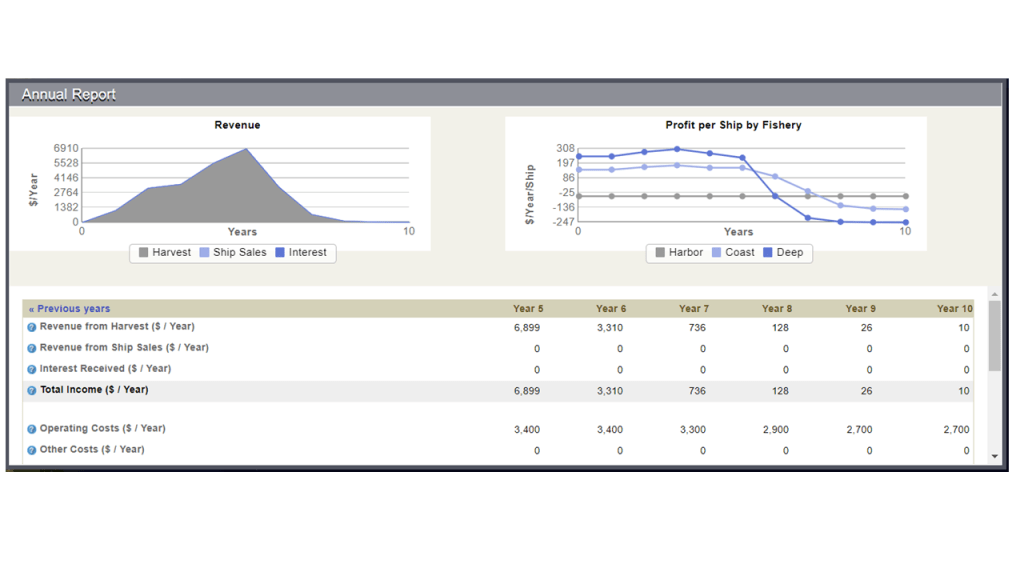
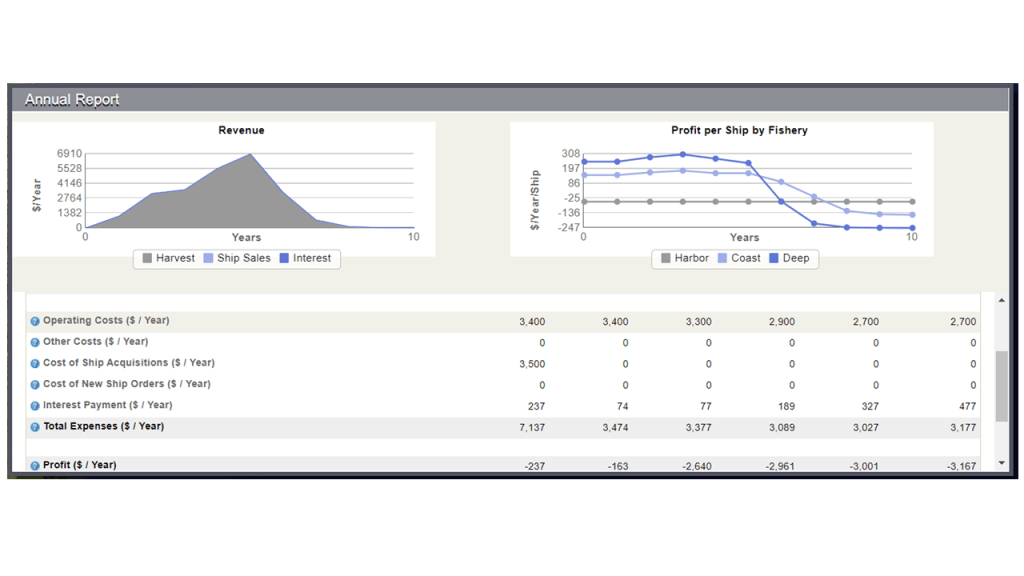
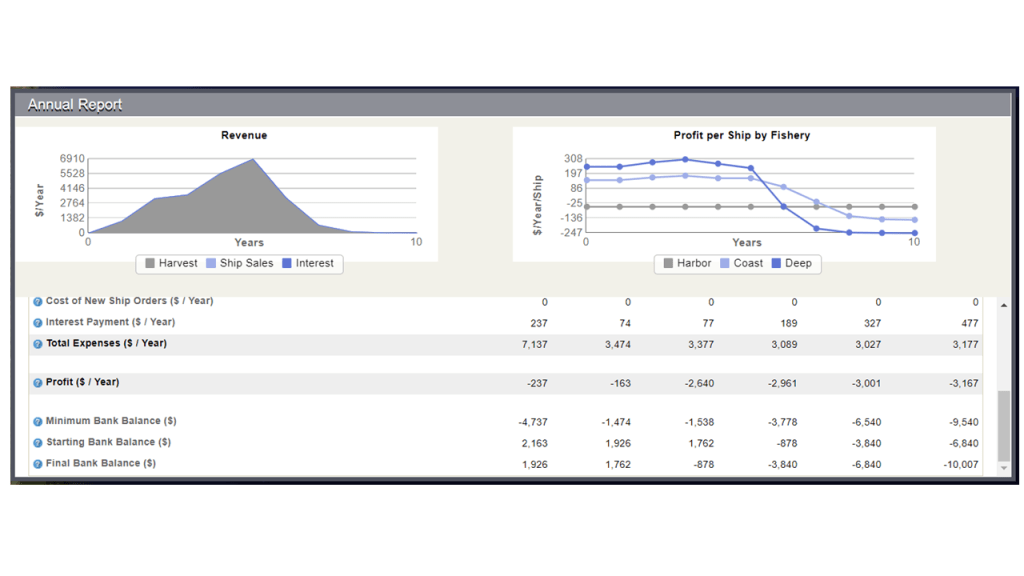
The term sustainable yield refers to the harvest of a specific natural resource. This refers to the amount of harvest /capture that can occur while maintaining the population’s stability. The maximum sustainable yield for example anchovies is the highest possible annual catch that can be sustained over time, by keeping the stock at the level producing maximum growth. If your yield is sustainable, the base of your population remains unaffected and you are able to exploit anchovy regularly and over the long term.
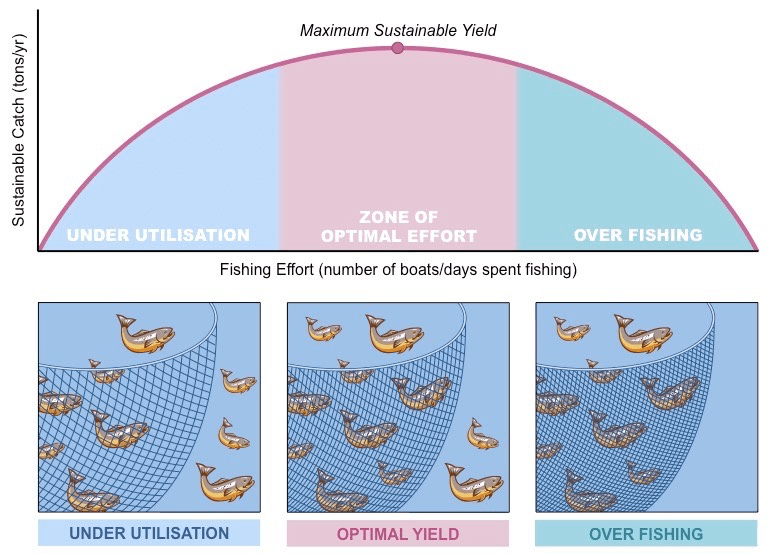
Government regulations or voluntary industry codes are of utmost importance to achieve a sustainable yield. Regulations are the primary vehicles by which the government implements laws and regulatory objectives. They are specific standards or instructions concerning what individuals, businesses, and other organizations can or cannot do. Regulations promotes the public interest. They are based on broad principles that last forever and do not favour specific companies over others.
If there are no limitations, rules or monitoring of harvesting fish stocks, anyone can catch as much fish whenever they want, and depletion of these resources will occur. Therefor the government sets out these regulations to maintain a sustainable yield., so that enough fish will be available to reproduce and ensure resources for the use of future generations.
Anchor Management is a proud founding member of the Aqua Waves Marine Stewardship Council. Members of the Aqua waves marine stewardship council pledge not to catch any fish on the coastal area of aqua waves, these coastal zones serves as breeding zones for the anchovies. By not fishing in these waters we can ensure that juvenile fish can reach maturity and migrate into the deep waters. Members also agree to responsible fishing practices and to limit catch to sustainable yield. The positive effects of the Aqua Waves Marine Stewardship Council can be seen by looking at the results from the first (no regulations), second (restrictive government regulations) and the third (self-regulation/industry) fishing seasons.
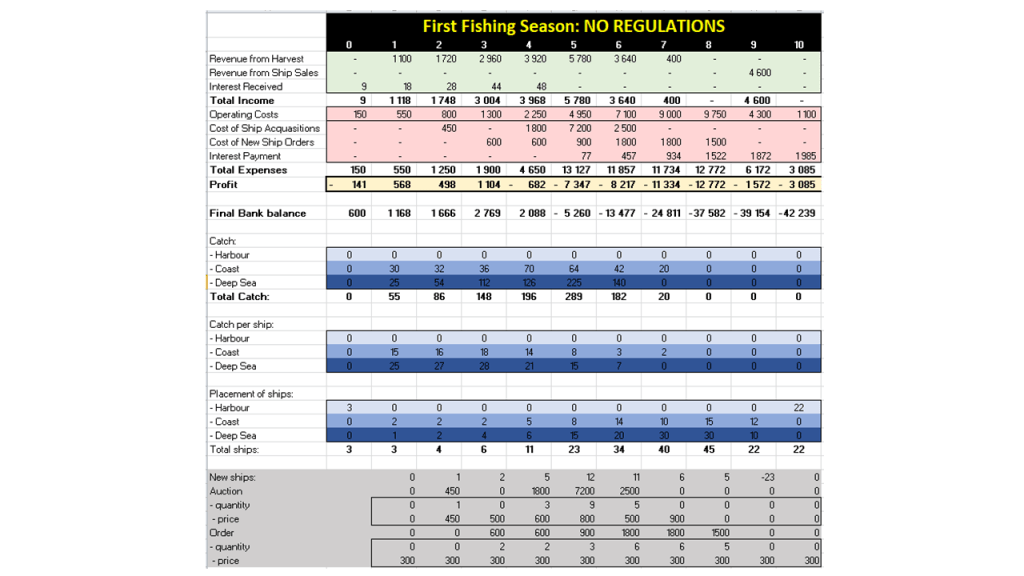
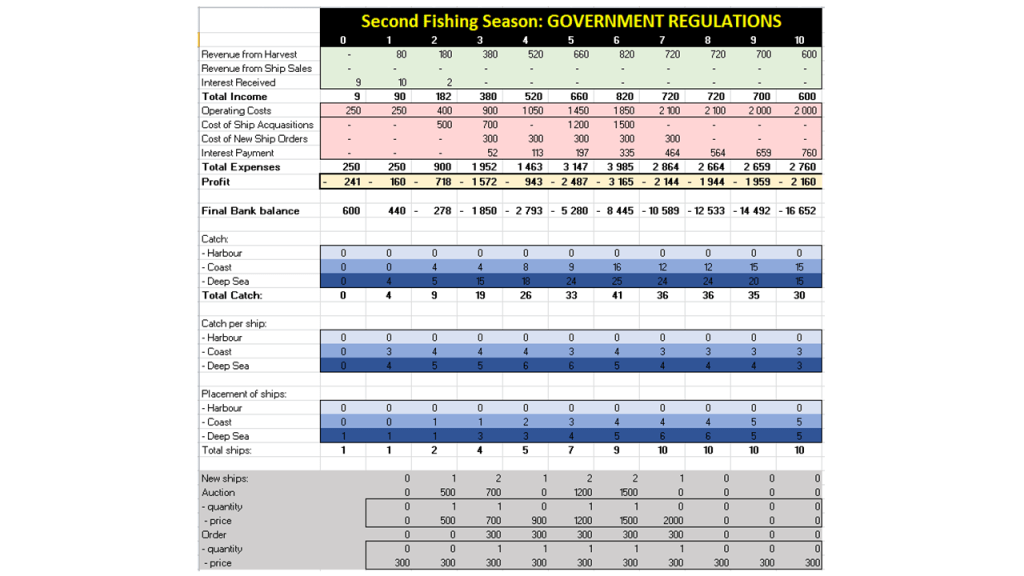
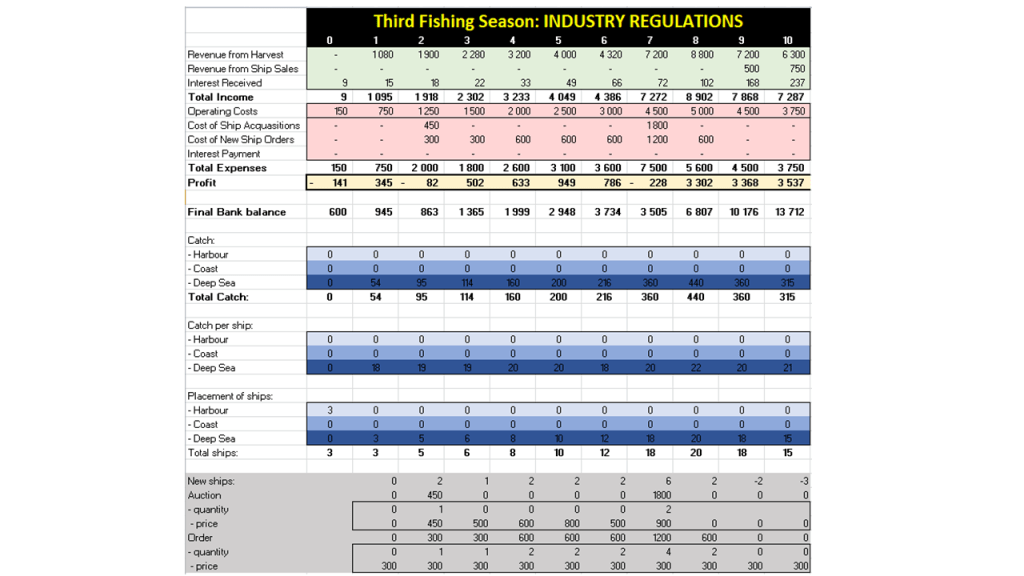
When looking at the total maximum income, it is the highest with industry regulations, and the lowest with government regulations. The final profit is also the highest with industry regulations, at R3537 and the lowest with no regulations, at -R3085. The final bank balance is the highest in industry regulations with R13712, and has a negative balance in the first and second fishing season. By looking at the total highest catch, it can once again be seen that the highest catch is in the fishing season with the industry regulations in place, with 440. This can be due to the fact that industry regulations have given the fish time to reproduce and thus there were ample fish to be caught in the last months of the fishing season.
Thus the industry regulation, the Aqua Waves Marine Stewardship Council, has a positive affect on the company and on the reproduction of fish, Anchor Management is proud to be a founding member.
By looking at the information above we can clearly make a conclusion that complying with government rules and regulations in the short term may not always be that advantageous ,but after a few seasons we see that it becomes more advantageous than it would have been without any regulations. Also, by not harvesting any anchovies on the coastal areas and by harvesting responsibly to only the maximum of sustainable yield shows that these strategies will ensure long term sustainability of Anchor Management by always assuring that there will be enough anchovies to harvest for all. By also encouraging customers to only buy products with a label of approval and restaurants to only sell these products, long term sustainability can be achieved. This ensures that Anchor Management will not have to worry about loss of revenue because of strong resource restrictions and not being able to supply enough to their customers (because of recourse depletion). Thus, regulations and rules also ensure the profitability of Anchor Management.
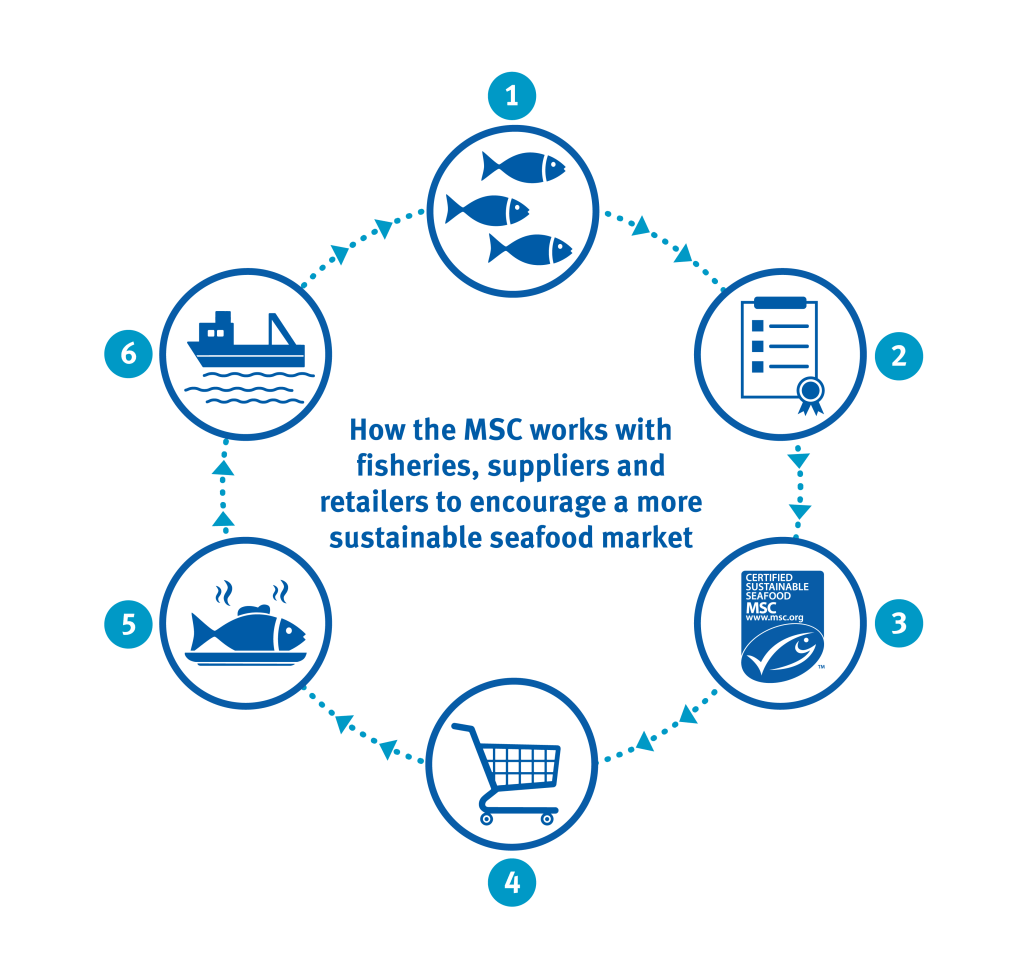
This is very important for the larger stakeholder community of Aquawaves, because if there is no assurance of future sustainability of this asset, it will not be available and usable in the long term for future generations. People that work in the waters of Aquawaves and that get their salaries from it wants to know that this will still be available in the future. People who invest in companies that are reliant on the waters of Aquawaves will want assurance of profitability. Customers and wholesalers will want a continuous supply of anchovies and by adhering to these regulations we can ensure that their needs will be fulfilled. The government and pressure groups will want to see cooperation from all relevant parties as they actively try to protect our resources. Management will want to see that profit is being made throughout the fishing season and this will not be possible without regulations as companies will then exhaust resources. If there are no more fish to catch then the local community could be affected with more unemployment that can be resolved with regulations that ensure the sustainability of resources. From the above we can conclude that these regulations and rules have a great effect on all types of stakeholders of Aquawaves.
Follow this link for our Value Creation page: https://cash449.finance.blog/value-creation/?frame-nonce=a7dea3051e
 Anchor Management